In the fast-paced life of USA cities like New York, Los Angeles, and Chicago, people are spending more time indoors than ever. This shift has given rise to one of the biggest interior design movements of recent years: Biophilic Interior Design. Biophilic Interior Design is all about connecting our modern indoor living spaces with the healing power of nature. Whether you want to add life to a dull corner, purify your indoor air, or create a peaceful sanctuary in your bedroom, incorporation of houseplants is the easiest and most affordable premium Biophilic Interior Design . In this ultimate guide, we will discover how you can elevate your interior aesthetic using high-end indoor plant styling, proper placement, and modern planters.
1. The Art of Grouping: Creating a Focal Green Corner
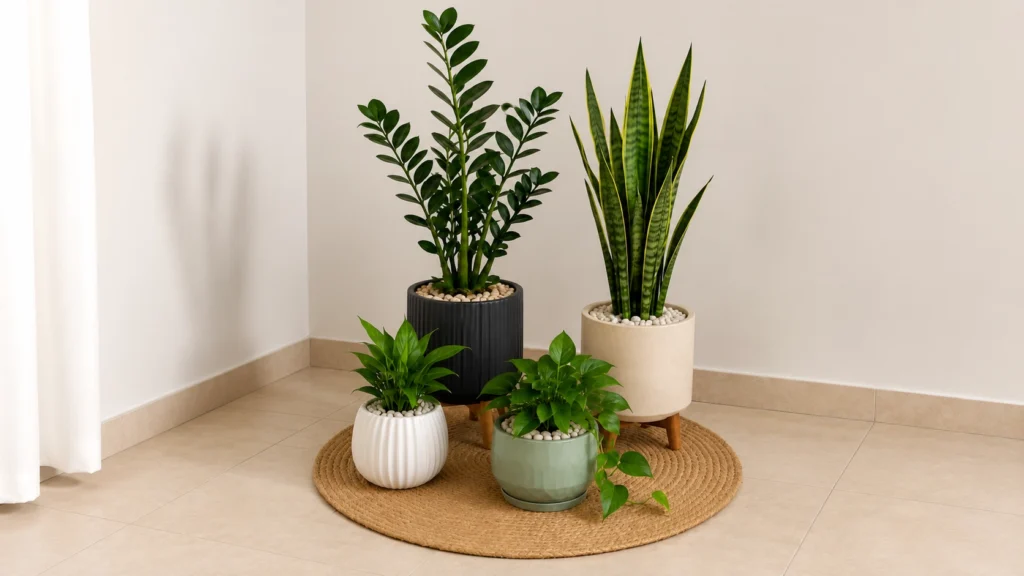
One of the biggest mistakes amateur home decorators make is scattering single, small pots randomly across a room. This often creates visual clutter rather than a cohesive look. Top interior designers in the USA always suggest the “Rule of Threes” or creating structured plant clusters.
Why Plant Clustering Works
When you group plants of different heights, textures, and leaf shapes together, you create a natural focal point that immediately draws the eye. Additionally, plants grouped together create a microclimate that helps maintain moisture levels, keeping your green friends healthier for longer.
Best Plants for an Elegant Floor Cluster
ZZ Plant (Zamioculcas zamiifolia): Known for its glossy, deep green leaves and unmatched durability.
Snake Plant (Sansevieria): Delivers clean vertical lines and acts as an excellent structural background element.
Pothos (Devil’s Ivy): Adds a soft trailing effect that softens the sharp edges of planters and walls.
Visual Placement Idea: Use a round jute or seagrass rug underneath your floor planters to anchor the setup and introduce organic textures to a tiled or hardwood floor.
2. Elevating the Living Room: Statement Floor Plants and Luxury Planters
The living room is the heart of your home—it’s where you entertain guests and unwind after a long day. If your living room feels cold or overly transactional, adding a large, structural statement plant can instantly make it look like a page straight out of Architectural Digest.
The Power of the Areca Palm
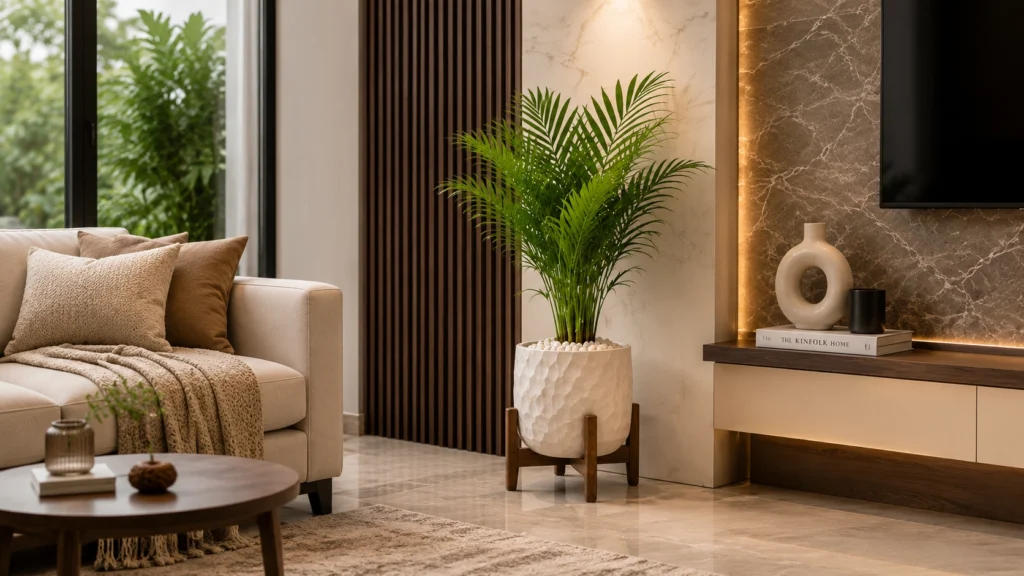
An Areca Palm (Dypsis lutescens) or a Majesty Palm brings an instant tropical, high-end resort vibe to any living space. Its feathery, arching fronds filter bright light beautifully and add subtle movement to an indoor environment.
Choosing the Right Luxury Planter
A premium plant deserves a premium pot. To match the modern USA home aesthetic:
Textured White Ceramic: Adds clean, sophisticated dimension without overpowering the room’s color scheme.
Wooden Plant Stands: Elevating your planter on a mid-century modern wooden stand adds height, breaks up flat floor lines, and makes cleaning underneath incredibly easy.
Fluted Wall Elements: Placing your statement plant against a dark wood fluted accent wall or a backlit marble panel creates a spectacular contrast that screams luxury.
3. Creating a Bedroom Sanctuary: Air-Purifying Plants for Better Sleep
Your bedroom should be a temple of relaxation and wellness. Incorporating plants into your bedroom layout goes beyond mere aesthetics—it directly impacts your sleep quality. According to famous NASA clean air studies, certain indoor plants are highly effective at filtering out volatile organic compounds (VOCs) like benzene and formaldehyde.
The Ultimate Bedroom Companion: The Snake Plant
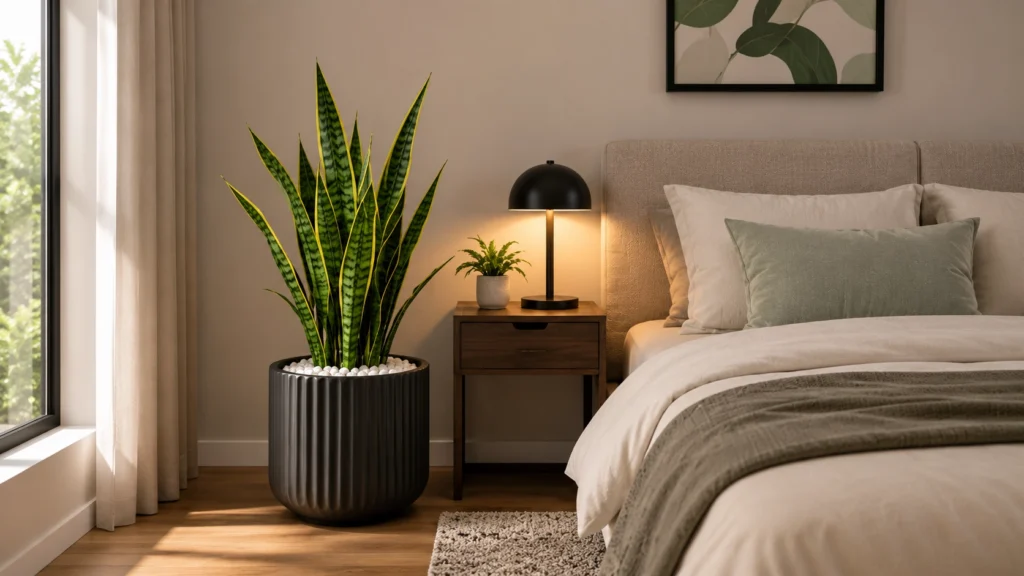
While most plants release carbon dioxide at night, the Snake Plant continues to produce clean oxygen during the dark hours. Its upright, architectural leaves can effortlessly fill an empty space next to your nightstand.
Styling Tips for a Calming Bedroom Palette
Keep the tones muted and organic. A matte charcoal ribbed ceramic pot contrasts beautifully with soft beige linens, olive green accents, and warm wooden furniture.
Use a warm, soft-glow bedside lamp next to the plant to cast dramatic, soothing shadows on the wall at night, which helps signal your brain to wind down.
4. Kitchen Biophilia: Styling the Countertops with Trailing Vines
The kitchen is often referred to as the busiest room in the house, filled with hard surfaces like marble countertops, stainless steel appliances, and wooden cabinetry. Adding a touch of soft greenery can balance the industrial or heavy feel of these structural elements.
The Golden Pothos: Low-Maintenance and High Visual Impact
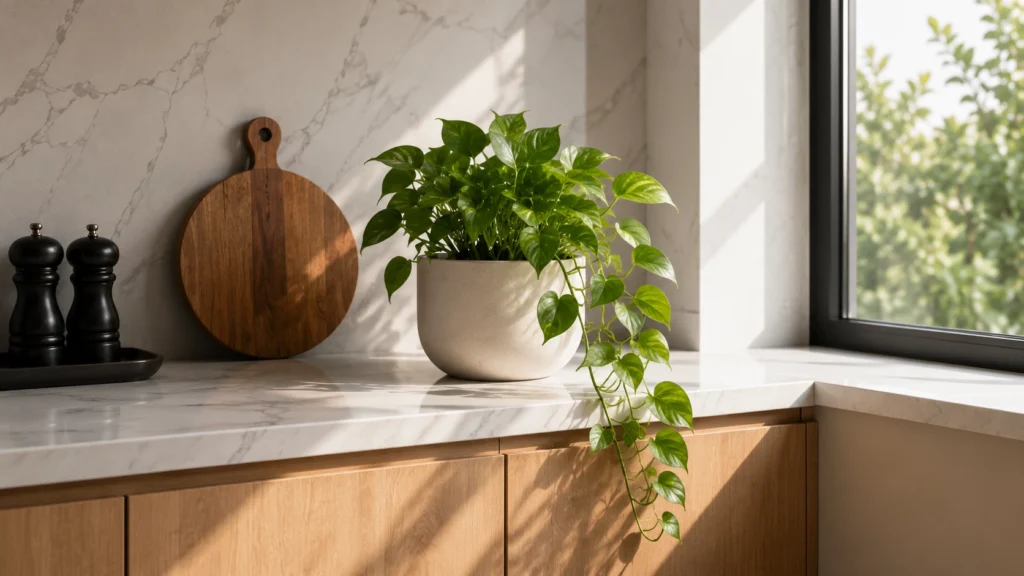
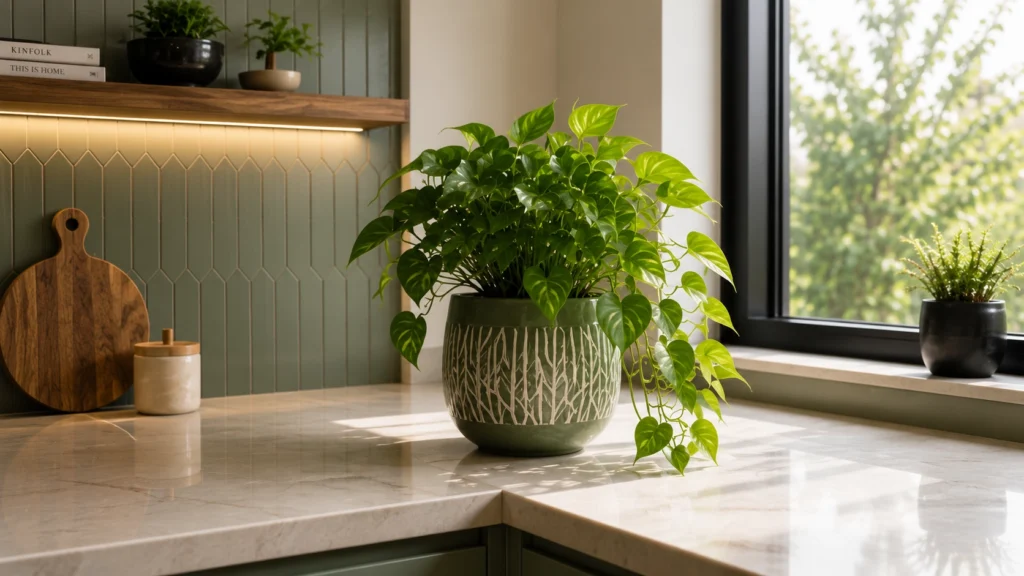
For kitchen countertops, windowsill areas, or open floating shelving, nothing beats a healthy Golden Pothos. It is incredibly resilient, handles fluctuating kitchen humidity exceptionally well, and features beautiful heart-shaped leaves that cascade down elegantly.
Practical Kitchen Placement Strategies
The Bright Corner: Place your potted pothos near a window where it can catch natural morning light.
Contrast Textures: Pair a smooth, matte white ceramic pot with organic kitchen tools like a thick wooden cutting board or dark matte-black pepper mills to create a magazine-worthy vignette.
Keep it Functional: Ensure trailing vines are neatly draped away from cooking surfaces or areas with high heat to keep the plant vibrant and safe.
When looking at high-end USA real estate listings in places like Aspen or Miami, a common theme emerges: the intentional use of a single, large structural plant in the master suite rather than multiple small accents. This design approach creates a serene “boutique hotel” vibe.
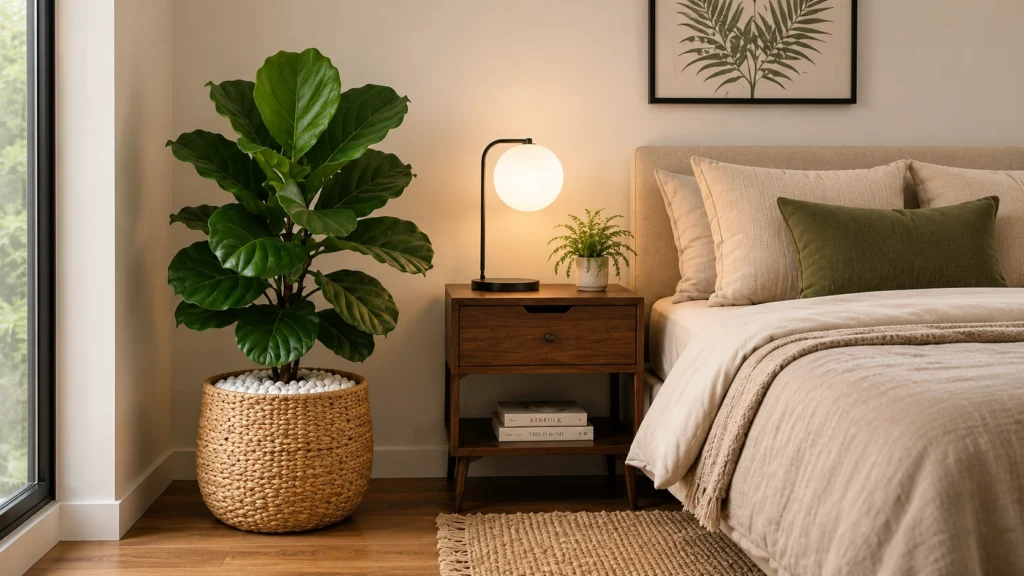
Styling the Fiddle Leaf Fig (Ficus lyrata)
The Fiddle Leaf Fig remains an absolute darling of the Biophilic Interior Design due to its massive, violin-shaped waxy leaves and dramatic height. To perfectly execute the Biophilic Interior Design “Organic Modern” aesthetic, bypass traditional ceramic pots and opt for a woven seagrass or heavy jute basket planter.
Texture Layering Checklist
To make your master bedroom feel ultra-premium, layer your textures deliberately:
The Base: A textured, fringed neutral wool rug under the bed and planter.
The Furniture: Rich walnut or natural oak nightstands that introduce warm timber tones.
The Accent: Balance the large green leaves of your statement plant by throwing a single olive-green or sage lumbar pillow onto neutral, high-thread-count beige linen bedding.
6. The Grand Foyer: Creating an Unforgettable First Impression
In luxury home staging, the entryway or foyer sets the entire tone for the rest of the house. It tells your guests exactly what to expect. A cold, empty hallway feels uninviting, but introducing vibrant, colorful foliage can instantly transform it into a warm, welcoming zone.
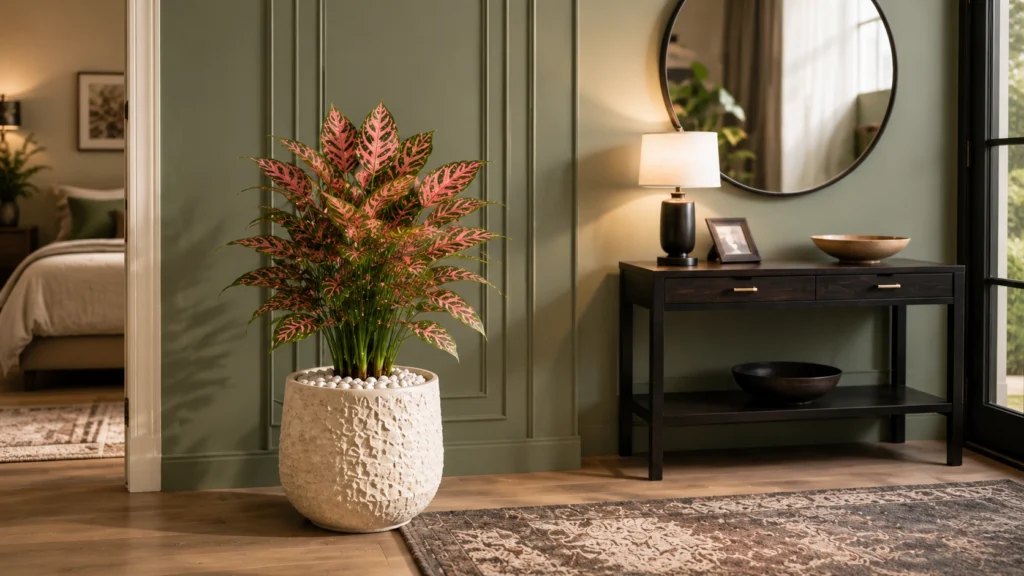
Bringing in Color with Pink Aglaonema (Chinese Evergreen)
If you want to step away from traditional deep greens, the Pink Aglaonema is an incredible choice. Its variegated leaves feature striking splashes of bright pink and cream, which instantly catch the eye.
Console Table Harmony
When placing a bold plant near an entry console table, follow these layout principles:
The Backdrop: Position the plant against a muted olive or sage green paneled feature wall to make the pink variegation pop.
The Mirror: Hang a minimalist, round matte-black or brass mirror above the console table. This reflects natural light and subtly mirrors the plant’s silhouette from different angles.
The Balance: Use a small, warm-toned ceramic table lamp on the console to anchor the space during evening hours.
7. Transitional Spaces: Elevating Staircases and Bare Hallway Corners
Transitional areas—like the landing of a staircase, a wide hallway, or the corner between rooms—are often treated as design afterthoughts. However, these architectural dead zones are actually prime real estate for large-scale biophilic statement pieces.
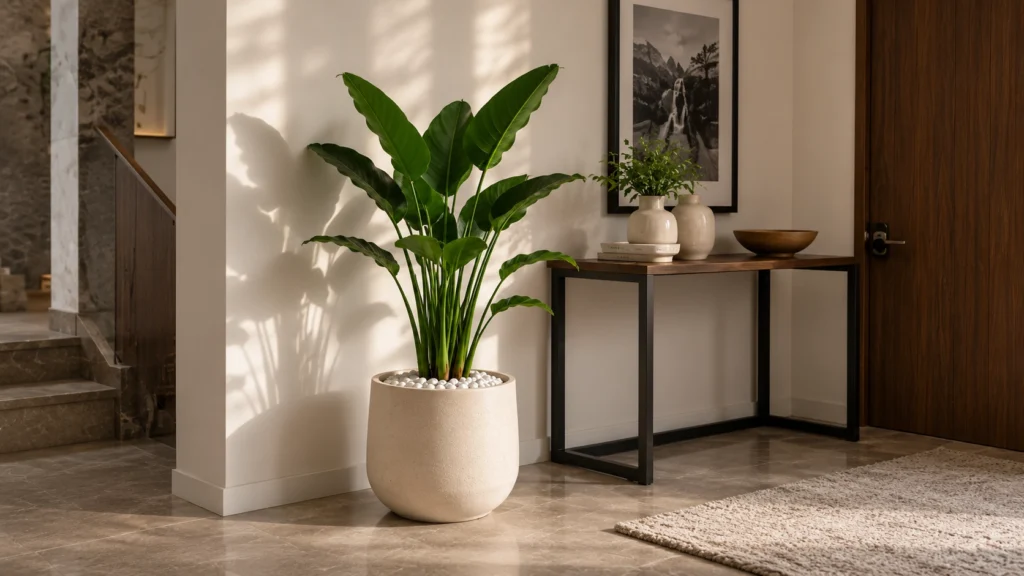
Architectural Drama with the Bird of Paradise (Strelitzia nicolai)
The Bird of Paradise plant delivers unmatched structural drama. Its massive, banana-like leaves fan out elegantly, scaling vertical wall spaces effortlessly.
Minimalism in Large Planters
For high-traffic transitional zones, keep the styling clean and uncluttered:
Planter Choice: Choose a large, smooth, matte eggshell or concrete bowl planter. It provides a sturdy base for top-heavy plants while maintaining a sleek, modern profile.
Top Dressing: Cover the soil with smooth, polished white river stones. This hides bare dirt, seals in moisture, and adds a crisp, high-end finish.
Negative Space: Let the plant breathe. Place it near a simple, thin-framed console table with minimal ceramic vases so the architectural leaves remain the star of the show.
8. Seamless Countertop Integration: Patterned Planters for Custom Kitchens
As we explored earlier, trailing plants are fantastic for breaking up sharp kitchen lines. However, if you have a kitchen with extensive custom tile work or premium vertical backsplashes, your plant styling should feel deeply integrated with that specific architecture.
Upgrading the Pothos Presentation
Instead of a plain container, choose a custom-etched or patterned ceramic pot. A green glazed pot featuring an intricate white forest or branch pattern creates a brilliant design dialogue with sage-green vertical picket tile backsplashes or fluted cabinetry.
Maximizing Natural Window Light
Place your patterned planter on a premium quartz or marble countertop right where the morning sun hits. The natural light will bounce off the glossy leaves and highlight the details of your artisan pot.
Pro Staging Tip: Pair the setup with functional, high-quality organic elements, like a raw-edge wooden chopping board or small matching succulent pots on open floating shelves above the counter.
9. Illuminating Greenery: Pairing Ambient LED Lighting with Statement Plants
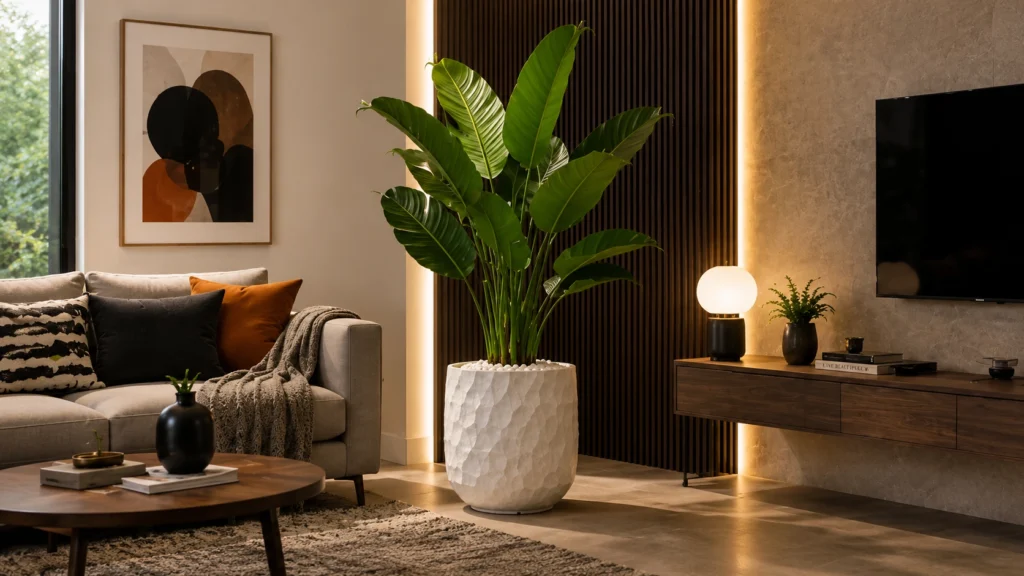
One of the most highly sought-after Biophilic Interior Design in the USA this year is the integration of ambient LED lighting with natural elements. A large architectural plant placed near a warm, glowing light source creates a breathtaking play of shadows and highlights.
The Majestic Bird of Paradise Next to Media Consoles
The TV wall or media console area can often feel dominated by cold electronics and hard screens. Placing a large Bird of Paradise (Strelitzia) next to your entertainment unit instantly softens the space.
Lighting and Texture Synergy
Wood Slat Walls: If you have a wooden slatted acoustic wall with warm LED backlighting, place a white, heavily textured pot in front of it. The contrast between the stark white pot, the rich green leaves, and the glowing wooden background creates an ultra-luxurious, cinematic vibe.
Accent Lighting: Use a frosted globe table lamp near the plant. The diffused light prevents harsh glare on the TV while illuminating the plant’s massive leaves during evening movie nights.
10. The Moody Bedroom Aesthetic: Dark Tones and Low-Light Champions
While bright, airy bedrooms are classic, the “Moody Bedroom” aesthetic—featuring deep, rich colors and low lighting—is taking over the luxury design space. This style promotes deep relaxation and feels incredibly sophisticated.
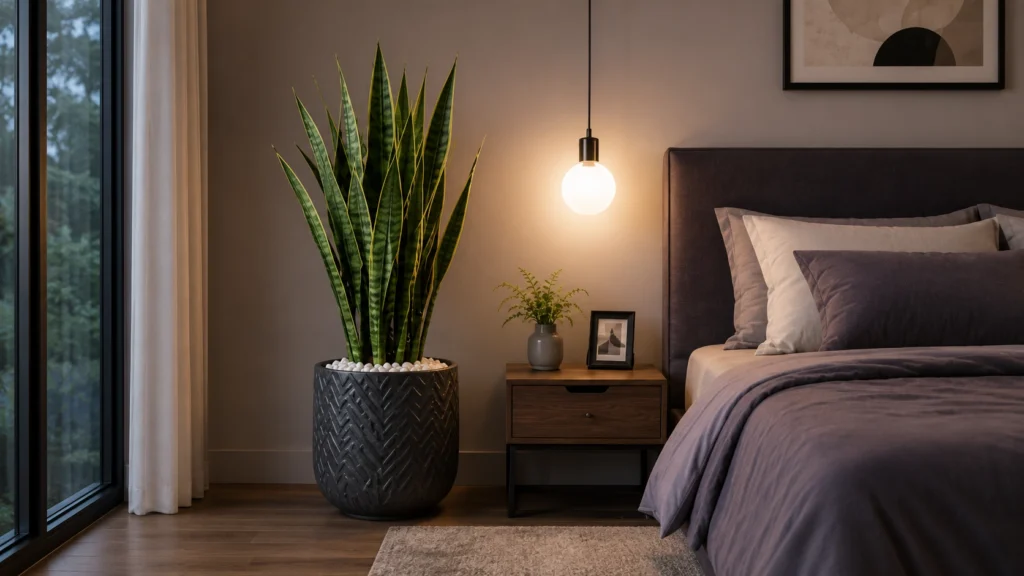
Styling the Snake Plant in Dark Interiors
The Snake Plant (Sansevieria) is not only a top-tier air purifier but also incredibly adaptable to low-light bedroom environments.
Mastering the Dark Palette
Planter Selection: Ditch the standard white pots and opt for a matte black or dark charcoal planter with a subtle woven or geometric pattern.
Bedding & Lighting: Pair this dark aesthetic with deep plum, charcoal, or dark grey linen bedding. Instead of a traditional bedside table lamp, install a modern warm-bulb pendant light hanging directly over the nightstand. This frees up table space while casting a dramatic glow over the sharp, vertical leaves of the Snake Plant.
11. High-Contrast Minimalist Hallways: Black Accents and Lush Palms
Minimalism doesn’t have to mean boring. The “High-Contrast Minimalist” trend uses stark contrasts—primarily matte black paired with warm neutrals—to create a striking visual impact, especially in transition spaces like hallways.
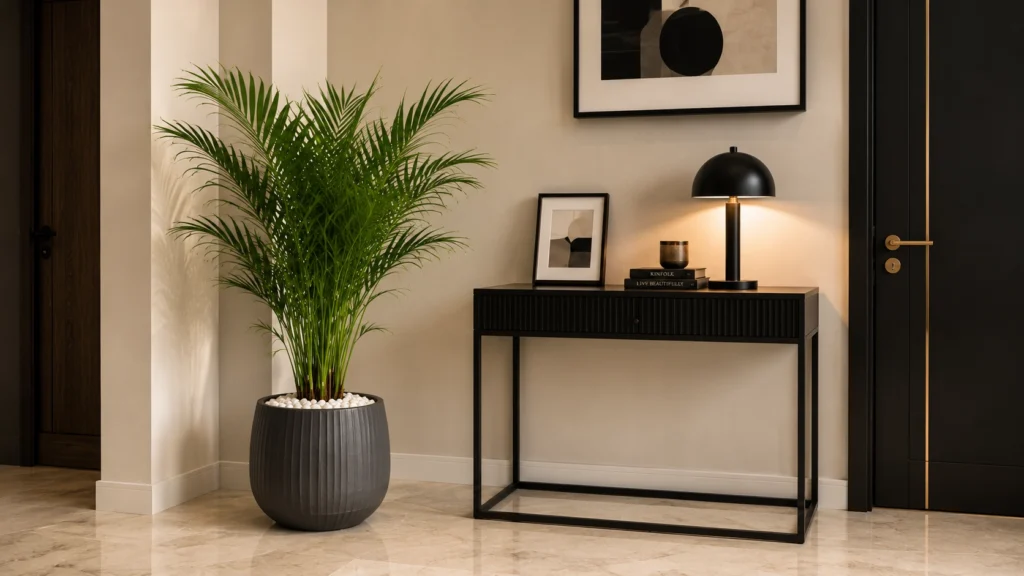
The Elegance of the Areca Palm
An Areca Palm provides an explosion of feathery green texture that perfectly disrupts the rigid, straight lines of a modern hallway.
Creating the High-Contrast Look
The Furniture: Use a sleek, minimalist black console table with fluted drawer details. Pair it with matching matte black hardware on your interior doors.
The Planter: A dark grey or soft black ribbed pot ensures the bright green leaves of the palm truly pop against warm beige or off-white hallway walls.
The Accessories: Keep the console table styling extremely intentional—a single black dome lamp, a stack of premium design books, and a simple piece of abstract monochrome art framed in black above the table.
12. Mid-Century Modern Perfection: The Iconic Monstera Deliciosa
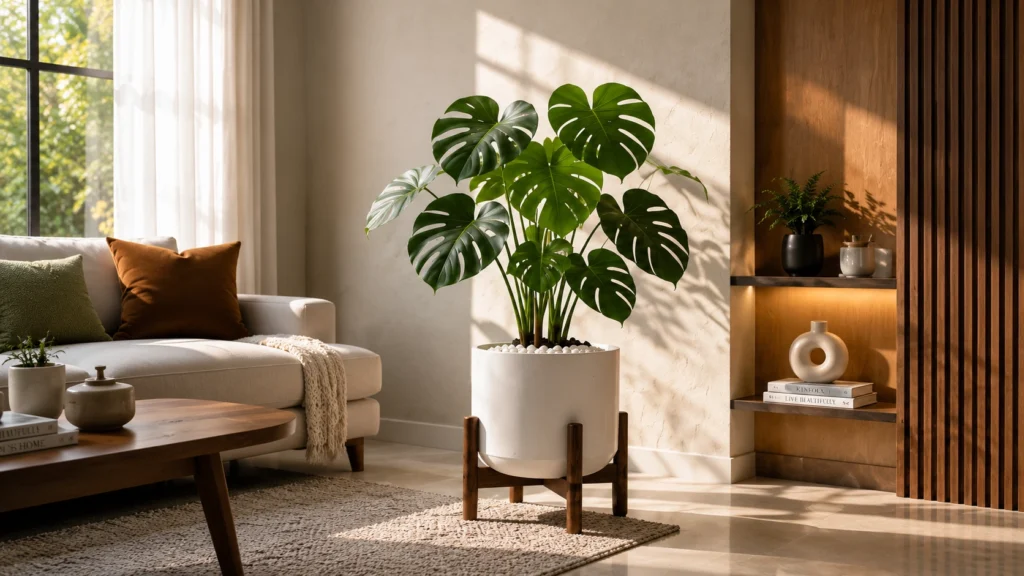
No modern USA home decor guide is complete without mentioning the undisputed king of house plants: the Monstera Deliciosa (often called the Swiss Cheese Plant). It is the ultimate statement piece for a Mid-Century Modern living room.
Styling the Monstera for Maximum Impact
The Monstera’s wide, fenestrated (split) leaves need room to spread out. It is best placed in a corner where it receives bright, indirect sunlight, allowing its massive foliage to act as a living sculpture.
Mid-Century Planters and Props
The Mid-Century Stand: Always elevate your Monstera. A smooth, matte white cylinder pot placed on a classic four-legged walnut wood stand is the signature look of high-end mid-century design.
Room Coordination: Pair the setup with low-profile furniture, such as a beige linen sofa with rust or terracotta-colored velvet pillows.
Floating Wood Accents: A background featuring warm wooden floating shelves with minimalist ceramic decor perfectly completes the organic, sun-drenched aesthetic.
Frequently Asked Questions (FAQs) About Indoor Biophilic Interior Design
1. How do I choose the right size planter for my indoor plant?
Always choose a planter that is 1 to 2 inches larger in diameter than the plant’s current nursery pot. If the pot is too large, the soil will hold excess water, leading to root rot. Ensure your decorative premium planters either have drainage holes or use the “staging” method (keeping the plant in its plastic drainage pot and placing that inside the decorative pot).
2. What are the best low-light plants for apartments without large windows?
If your space lacks bright natural light, stick to highly resilient species like the ZZ Plant (Zamioculcas zamiifolia), Snake Plant (Sansevieria), and Pothos. These plants thrive under artificial lighting and require minimal watering.
3. How can I keep my indoor plants safe from pets?
Many popular houseplants, including Monsteras and Pothos, can be toxic to cats and dogs if ingested. If you have pets, opt for pet-safe varieties like the Parlor Palm, Spider Plant, or Boston Fern. Alternatively, place toxic plants on high floating shelves out of reach.
4. How often should I water large statement plants like the Fiddle Leaf Fig?
Large structural plants generally prefer to dry out between waterings. As a rule of thumb, water your Fiddle Leaf Fig or Bird of Paradise only when the top 2-3 inches of the soil feel completely dry to the touch (usually every 10-14 days).
5. How do I prevent pests on my indoor decorative plants?
Wipe the leaves of your large plants (like Monstera and Bird of Paradise) with a damp microfiber cloth every two weeks. This not only keeps them looking glossy and high-end but also removes dust and prevents common pests like spider mites.
Conclusion: Transform Your Home with Biophilic Interior Design
Integrating indoor plants into your home decor is no longer just a hobby; it is a fundamental pillar of Biophilic Interior Design. Whether you are adding a massive Monstera to your mid-century living room, styling a moody bedroom with a Snake Plant, or softening a custom kitchen with trailing Pothos, greenery breathes life, luxury, and tranquility into your space.
By following this ultimate styling guide, selecting premium textured planters, and utilizing strategic lighting, you can effortlessly elevate your home to look like a multi-million-dollar masterpiece. Start small, choose the right plant for your light conditions, and watch your interior aesthetic transform.